Here’s a publication-ready, SEO-enriched article with H2–H4 headings, comparison tables, bullet points, practical insights, FAQs, and 2026-focused career considerations.
Remote Work vs. Office Work: Which Is Better for Your Career in 2026?
The way people build careers has changed dramatically over the past few years. Remote work, hybrid jobs, and traditional office positions now compete as different paths for professional growth.
In 2026, the question is no longer simply “Can I work remotely?” It’s:
“Which work environment gives me the best opportunity to grow my skills, income, professional network, and long-term career?”
The answer depends on your industry, personality, career stage, location, employer, and goals.
For some professionals, remote work provides flexibility, access to global opportunities, and better control over their schedules. For others, working in an office can provide stronger mentorship, easier collaboration, and more opportunities to build relationships.
This guide compares remote work vs. office work across productivity, career advancement, salary, networking, work-life balance, skills, job security, and long-term career development.
Remote Work vs. Office Work: What’s the Difference?
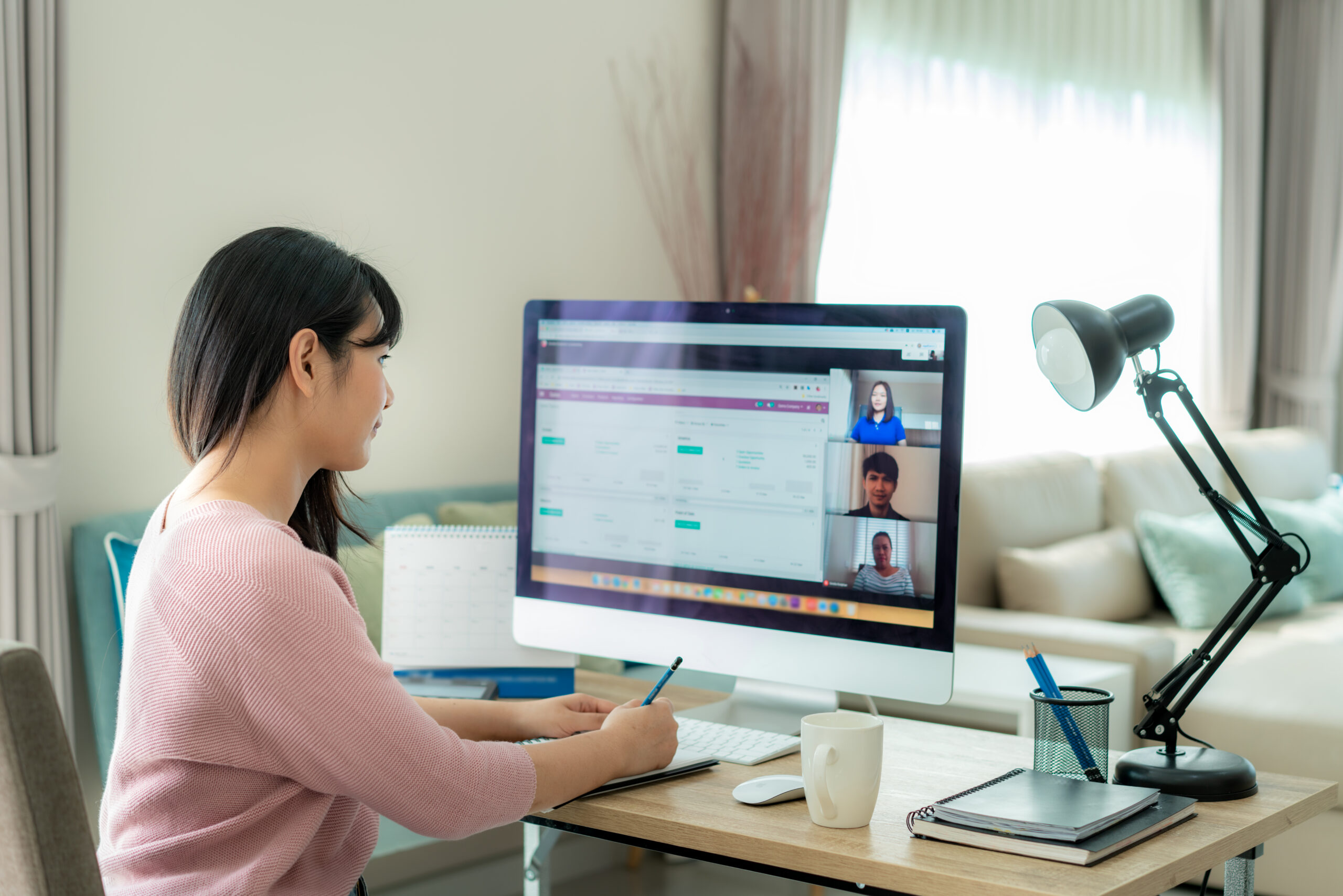
Remote work allows employees to perform their jobs outside a traditional workplace, usually from home or another location using digital communication and collaboration tools.
Office work requires employees to work primarily from a physical workplace, although many modern organizations now offer some flexibility.
There is also a third model: hybrid work.
Hybrid employees divide their time between remote work and an office.
Three Common Work Models
| Work Model | How It Works | Best Suited For |
| Remote | Work primarily outside the office | Independent professionals and distributed teams |
| Office | Work primarily at a physical location | Highly collaborative or location-dependent roles |
| Hybrid | Combination of remote and office work | Professionals who want flexibility and face-to-face interaction |
The best option depends on what you value most in your career.
Remote Work vs. Office Work: Quick Comparison
| Factor | Remote Work | Office Work |
| Flexibility | Excellent | Limited to moderate |
| Commute | None or minimal | Usually required |
| Networking | Mostly digital | Easier face-to-face |
| Mentorship | Requires intentional effort | Often easier naturally |
| Work-life boundaries | Can be difficult | Often clearer |
| Global job opportunities | Potentially broader | Usually location-dependent |
| Workplace social interaction | Digital | Face-to-face |
| Schedule control | Often higher | Often lower |
| Collaboration | Digital-first | In-person |
| Home distractions | Possible | Usually fewer |
| Career visibility | Requires intentional communication | Can be easier through physical presence |
| Office expenses | Lower for employees | Potential commuting/meal costs |
| Best for | Independence and flexibility | Collaboration and relationship-building |
Is Remote Work Better for Your Career in 2026?
Remote work can be an excellent career option, particularly for professionals whose roles can be performed effectively online.
It can offer several advantages.
1. Access to a Wider Job Market
One major advantage of remote work is that your employer doesn’t necessarily need to be located in your city.
Depending on employer policies, you may be able to apply for opportunities in different cities, regions, or countries.
This can be particularly valuable for professionals living in areas with fewer local opportunities.
Geographic Flexibility
Instead of:
Your skills → Local employers
remote work can potentially create:
Your skills → National or international employers
However, remote jobs aren’t automatically available everywhere. Companies may have restrictions based on country, state, tax rules, employment regulations, or time zones.
2. Less Commuting
Remote workers can eliminate or significantly reduce commuting.
That can mean:
- More personal time
- Lower transportation costs
- Less commuting stress
- Greater schedule flexibility
For someone spending two hours commuting every day, eliminating the commute can create substantial additional personal time.
3. Greater Schedule Flexibility
Some remote employers allow employees to organize their schedules around productivity and personal responsibilities.
Flexible work can be particularly valuable for people who:
- Have family responsibilities
- Live far from major employment centers
- Prefer nontraditional working hours
- Need greater control over their schedules
4. Potentially Better Work-Life Balance
Remote work can make it easier to integrate work and personal responsibilities.
You may be able to:
- Eat lunch at home.
- Handle small personal tasks during breaks.
- Spend more time with family.
- Exercise without commuting.
- Build a customized work environment.
However, flexibility doesn’t automatically create work-life balance.
Without boundaries, remote employees can end up working more, not less.
Is Office Work Better for Career Growth?
Office work still provides important career advantages.
For certain professionals, being physically present can make collaboration, mentorship, and relationship-building easier.
1. Easier Face-to-Face Networking
In an office, networking happens naturally.
You may meet:
- Managers
- Senior executives
- Colleagues
- Clients
- Mentors
- Employees from other departments
A casual conversation in a hallway or during lunch can sometimes lead to a valuable professional relationship.
Remote employees can build the same relationships, but usually need to be more intentional.
2. Easier Access to Mentorship
Early-career professionals often benefit from observing experienced colleagues.
In an office, you can sometimes learn simply by:
- Listening to discussions
- Watching how managers solve problems
- Asking quick questions
- Joining meetings
- Observing workplace dynamics
Remote employees can receive excellent mentorship too, but it may require scheduled meetings and deliberate communication.
3. Greater Visibility
One potential advantage of office work is physical visibility.
Managers regularly see employees participating in meetings, collaborating, and solving problems.
Remote workers can be equally visible, but they need to communicate their contributions clearly.
How Remote Employees Can Increase Visibility
Try:
- Sending concise project updates.
- Sharing measurable results.
- Documenting achievements.
- Speaking during relevant meetings.
- Volunteering for important projects.
- Communicating progress proactively.
The goal isn’t to constantly advertise yourself.
It’s to make your work visible.
Remote Work vs. Office Work for Career Advancement
Career advancement depends on more than location.
Your:
- Skills
- Results
- Relationships
- Leadership ability
- Communication
- Reputation
- Industry
- Employer
- Initiative
can all influence your progression.
Career Growth Comparison
| Career Factor | Remote | Office |
| Mentorship | Good with intentional effort | Often easier naturally |
| Networking | Requires planning | Often happens organically |
| Visibility | Must be communicated | Often more naturally visible |
| Skill development | Strong self-learning required | Learning through proximity |
| Leadership opportunities | Available | Available |
| Cross-team exposure | Digital | Often easier informally |
| Career progression | Depends heavily on company culture | Depends heavily on company culture |
Neither environment automatically guarantees career growth.
Remote Work vs. Office Work: Which Pays More?
There is no universal rule that remote jobs pay more or office jobs pay more.
Salary depends on:
- Industry
- Experience
- Location
- Skills
- Company
- Job level
- Role
- Market demand
A remote software engineer may earn significantly more than an office-based employee in another profession.
Likewise, an office-based senior executive may earn more than an entry-level remote employee.
What Remote Work Can Change
Remote work can sometimes change the relationship between salary and geography.
For example, someone living in a lower-cost area may be able to compete for jobs with companies based in higher-paying markets, depending on the employer’s compensation policies.
But many employers now use geographic pay structures.
Don’t assume that a remote job automatically means a high salary.
Remote Work vs. Office Work for Skills Development
Your work environment can influence how you develop professional skills.
Skills Often Strengthened by Remote Work
Remote employees frequently need strong:
- Written communication
- Self-management
- Time management
- Digital collaboration
- Documentation
- Asynchronous communication
- Independent problem-solving
- Remote presentation skills
Skills Often Strengthened by Office Work
Office environments can provide more opportunities to develop:
- Face-to-face communication
- In-person networking
- Presentation skills
- Informal collaboration
- Workplace relationship management
- Real-time teamwork
The Best Career Strategy
Don’t limit yourself to the skills your environment naturally provides.
If you work remotely, intentionally develop networking and presentation skills.
If you work in an office, develop digital collaboration and asynchronous communication skills.
A well-rounded professional should be comfortable in both environments.
Remote Work vs. Office Work for Networking
Networking is one of the biggest differences.
Networking in an Office
Opportunities can happen naturally through:
- Lunches
- Meetings
- Conferences
- Team projects
- Office events
- Informal conversations
Networking Remotely
You may need to be more deliberate.
Try:
- Virtual professional communities
- LinkedIn conversations
- Industry events
- Online conferences
- Virtual networking meetings
- Professional associations
- Informal video calls
Remote Networking Strategy
Use a simple system:
Connect → Engage → Help → Maintain relationship
Don’t contact someone only when you need a job.
Build genuine professional relationships over time.
Remote Work vs. Office Work for Productivity
Productivity depends heavily on the individual.
Some people thrive in quiet home environments.
Others need the structure and social energy of an office.
Remote Productivity Advantages
Remote work can reduce:
- Office interruptions
- Commuting
- Unnecessary conversations
- Some types of workplace distractions
Remote Productivity Challenges
However, home workers may face:
- Household distractions
- Social media
- Isolation
- Poor work boundaries
- Difficulty switching off
- Lack of structure
Office Productivity Advantages
Offices can provide:
- Clear work/home separation
- Immediate collaboration
- Easier access to colleagues
- Structured schedules
Office Productivity Challenges
They can also involve:
- Commuting
- Open-office distractions
- Interruptions
- Unnecessary meetings
- Less schedule flexibility
Remote Work vs. Office Work for Work-Life Balance
Work-life balance is often presented as one of remote work’s biggest advantages.
But the reality is more complicated.
Remote Work
Potential advantages:
- No commute
- Flexible schedule
- Greater control over environment
- Easier access to home
- More personal time
Potential disadvantages:
- Work can invade personal time
- Difficulty disconnecting
- Isolation
- Household interruptions
Office Work
Potential advantages:
- Physical separation between work and home
- Social interaction
- Predictable schedule
- Easier transition after commuting home
Potential disadvantages:
- Commute
- Less schedule flexibility
- Workplace interruptions
- Time away from home
The Key Is Boundaries
Regardless of your work model, establish:
Start time → Work period → Breaks → End time → Personal time
Remote Work vs. Office Work for Introverts and Extroverts
Your personality can influence which environment you prefer.
Remote Work for Introverts
Remote work may provide:
- More control over social interaction
- Fewer spontaneous interruptions
- Quiet environments
- More time to think before responding
Office Work for Extroverts
Some extroverted professionals enjoy:
- Frequent social interaction
- Face-to-face brainstorming
- Team energy
- Spontaneous conversations
However, personality shouldn’t be the only deciding factor.
People can adapt to both environments.
Which Is Better for Early-Career Professionals?
For someone starting a career, office work can provide certain advantages.
Being around experienced professionals can accelerate informal learning.
You may have more opportunities to:
- Ask questions
- Observe senior employees
- Build relationships
- Receive immediate feedback
- Participate in team projects
However, remote work can also be excellent for early-career professionals if the employer has strong:
- Onboarding
- Training
- Mentorship
- Documentation
- Manager support
- Communication systems
What Should New Professionals Prioritize?
Don’t choose a job solely because it is remote.
Prioritize:
- Quality of management
- Learning opportunities
- Mentorship
- Skill development
- Career progression
- Compensation
- Work-life balance
- Flexibility
A strong learning environment can be more valuable than a remote-work label.
Which Is Better for Experienced Professionals?
Experienced professionals often have greater independence.
They may already have:
- Strong professional networks
- Specialized expertise
- Established workflows
- Industry knowledge
- Self-management skills
This can make remote work particularly attractive.
However, senior professionals may also benefit from office presence when leadership, relationship-building, client interaction, or organizational influence is important.
Remote Work vs. Office Work by Career Stage
| Career Stage | Potentially Better Environment | Why |
| Student/Intern | Office or hybrid | Exposure and mentorship |
| Entry-level | Office or hybrid | Faster informal learning |
| Mid-career | Remote, hybrid, or office | Depends on specialization |
| Senior specialist | Remote or hybrid | Greater independence |
| Manager | Hybrid or flexible remote | Depends on team needs |
| Executive | Hybrid or office | Relationships and leadership |
| Freelancer | Remote | Maximum flexibility |
This is only a general guideline.
Your industry and employer matter more than your job title alone.
When Remote Work Is the Better Choice
Remote work may be a strong option if you value:
- Flexibility
- Independent work
- No commute
- Global opportunities
- A customized workspace
- Greater schedule control
- Quiet environments
- Location independence
It’s particularly attractive for roles that are naturally digital.
Examples include:
- Software development
- Writing
- Digital marketing
- Graphic design
- Data analysis
- Customer support
- Project management
- Consulting
- Accounting
- Online education
When Office Work Is the Better Choice
Office work may be preferable if you value:
- Face-to-face collaboration
- Mentorship
- Networking
- Social interaction
- Structured environments
- Direct access to managers
- Hands-on work
Some industries also require physical presence.
Examples can include:
- Healthcare
- Manufacturing
- Construction
- Hospitality
- Laboratory work
- Certain engineering roles
- Retail
When Hybrid Work May Be the Best Option
Hybrid work can combine some of the benefits of both environments.
You might work remotely three days a week and in the office two days.
Hybrid Work Advantages
- Face-to-face collaboration
- Remote flexibility
- Networking opportunities
- Reduced commuting
- Greater independence
- Easier mentorship
Hybrid Work Challenges
- Scheduling complexity
- Commute on office days
- Potentially unequal treatment between remote and office employees
- Need to manage two working environments
For many professionals, hybrid work can be a useful middle ground.
How to Decide Between Remote and Office Work
Don’t ask only:
“Which one is better?”
Ask:
“Which environment is better for my specific career goals?”
Consider These 10 Questions
1. What Are My Career Goals?
Do you want:
- Leadership?
- Specialized expertise?
- Entrepreneurship?
- Higher income?
- International opportunities?
2. How Important Is Mentorship?
If you’re early in your career, access to experienced professionals may be especially valuable.
3. How Do I Perform Independently?
Remote work requires significant self-management.
4. How Important Is Networking?
Some careers depend heavily on relationships and personal reputation.
5. Do I Need Flexibility?
If flexibility is a major priority, remote work may have an advantage.
6. How Long Is the Commute?
A long commute can significantly affect your quality of life.
7. What Is the Company Culture?
A poorly managed remote company can be worse than a well-managed office.
8. What Skills Will I Learn?
Think about what you’ll be able to do after one or two years.
9. What Is the Compensation?
Compare the entire package, not just salary.
Consider:
- Salary
- Bonuses
- Benefits
- Retirement contributions
- Equipment
- Paid leave
- Career development
10. Where Will I Be in Five Years?
The best job is often the one that moves you toward your long-term goals.
Remote Career Success Tips for 2026
If you choose remote work, don’t become invisible.
Build Your Professional Visibility
Regularly communicate:
- Project progress
- Completed work
- Measurable outcomes
- Challenges
- Solutions
- Future priorities
Build a Strong Digital Network
Maintain professional relationships through:
- Industry communities
- Conferences
- Professional groups
- Online events
Develop High-Value Skills
Focus on skills that remain useful across different employers.
Examples include:
- Communication
- Data literacy
- Technology
- Problem-solving
- Leadership
- Project management
- AI literacy
- Strategic thinking
Office Career Success Tips for 2026
If you’re office-based, don’t rely solely on physical visibility.
Build a Reputation for Results
Being seen at your desk isn’t the same as creating value.
Focus on:
- Quality work
- Reliability
- Communication
- Problem-solving
- Collaboration
Build Relationships Intentionally
Get to know colleagues outside your immediate team.
Cross-functional relationships can become valuable throughout your career.
Use Office Time Strategically
If your employer offers flexibility, use office days for activities that benefit from physical presence:
- Brainstorming
- Mentorship
- Networking
- Team planning
- Workshops
- Relationship-building
Use quiet remote days for concentrated individual work when possible.
The Future of Remote and Office Work in 2026
The future isn’t necessarily about remote work completely replacing offices.
Many organizations are experimenting with different combinations of:
- Remote work
- Hybrid work
- Flexible schedules
- Office collaboration
- Distributed teams
The most valuable professionals will likely be those who can work effectively regardless of location.
The Future-Ready Professional
A career-ready employee should be able to:
- Communicate digitally
- Collaborate face-to-face
- Manage projects independently
- Build professional relationships
- Use modern productivity tools
- Learn new technology
- Adapt to changing work environments
Flexibility itself is becoming a valuable professional skill.
Remote Work vs. Office Work: Decision Matrix
Use this quick framework to determine which environment aligns with your priorities.
| Your Priority | Remote | Office | Hybrid |
| Maximum flexibility | ⭐⭐⭐ | ⭐ | ⭐⭐⭐ |
| Face-to-face networking | ⭐⭐ | ⭐⭐⭐ | ⭐⭐⭐ |
| Mentorship | ⭐⭐ | ⭐⭐⭐ | ⭐⭐⭐ |
| No commute | ⭐⭐⭐ | ⭐ | ⭐⭐ |
| Independent work | ⭐⭐⭐ | ⭐⭐ | ⭐⭐⭐ |
| Social interaction | ⭐⭐ | ⭐⭐⭐ | ⭐⭐⭐ |
| Global opportunities | ⭐⭐⭐ | ⭐ | ⭐⭐ |
| Work-life boundaries | ⭐⭐ | ⭐⭐⭐ | ⭐⭐⭐ |
| Quiet environment | ⭐⭐⭐ | ⭐⭐ | ⭐⭐⭐ |
| Collaboration | ⭐⭐ | ⭐⭐⭐ | ⭐⭐⭐ |
These ratings are general rather than universal.
Your company and role can completely change the experience.
Useful Insights: What Actually Matters for Your Career?
Your Manager May Matter More Than Your Location
A supportive manager can help you grow whether you work remotely or in an office.
A poor manager can limit your development in either environment.
Skills Compound Over Time
Think beyond your next paycheck.
Ask:
“What skills will this job help me develop?”
A position that teaches valuable skills can have significant long-term career value.
Relationships Still Matter
Remote work doesn’t eliminate networking.
It simply changes how networking happens.
Flexibility Has a Career Value
The ability to work from different locations can be valuable—but only if it doesn’t come at the expense of learning, visibility, or advancement.
Results Matter More Than Location
Ultimately, strong professionals create value.
Whether you’re working from a home office or a corporate office, your ability to solve problems, communicate effectively, and deliver results will remain important.
Frequently Asked Questions
Is remote work better than office work for your career?
Neither is universally better.
Remote work can provide flexibility and broader geographic opportunities, while office work can offer easier networking, mentorship, and face-to-face collaboration.
Your industry, career stage, employer, and personal goals should determine the best choice.
Is remote work good for career growth?
Yes, remote work can support strong career growth when the company provides mentorship, clear promotion paths, training, and opportunities to take on meaningful responsibilities.
Remote employees should also communicate their achievements and build professional relationships intentionally.
Do remote workers get promoted less often?
Promotion opportunities depend heavily on company culture, management practices, performance, and visibility.
Remote employees can reduce visibility problems by communicating results, participating in important projects, building relationships, and discussing career goals with managers.
Is office work better for networking?
Face-to-face environments can make spontaneous networking easier.
However, remote professionals can build strong networks through online communities, professional events, video meetings, and intentional relationship-building.
Is remote work better for work-life balance?
It can be, especially because it eliminates commuting and may provide more flexibility.
However, remote workers can also struggle to disconnect from work. Strong boundaries are important.
Is hybrid work better than fully remote work?
Hybrid work can offer a balance between flexibility and in-person collaboration.
Whether it is better depends on how the hybrid policy is implemented. A poorly designed hybrid workplace can create more complexity than either fully remote or fully office-based work.
Which is better for new graduates: remote or office work?
An office or hybrid environment can provide valuable exposure to experienced colleagues and informal mentorship.
However, a well-managed remote position with strong training and mentorship can also be an excellent starting point.
Evaluate the learning environment rather than choosing solely based on location.
Can remote workers earn more money?
Remote work itself doesn’t guarantee higher pay.
Income depends on skills, industry, employer, experience, location, and role.
Remote work can potentially expand access to employers outside your immediate geographic area, but compensation policies vary.
Does working in an office help you get promoted?
Physical presence can make certain forms of networking and visibility easier, but simply being in the office does not guarantee promotion.
Performance, skills, relationships, leadership, and measurable results remain important.
What jobs are best for remote work?
Digital roles are often particularly compatible with remote work, including:
- Software development
- Writing
- Digital marketing
- Graphic design
- Data analysis
- Customer support
- Project management
- Consulting
- Accounting
The availability of remote positions varies by employer and location.
What jobs require office work?
Jobs involving physical equipment, customers, patients, facilities, or hands-on activities often require some form of physical presence.
Examples include many roles in:
- Healthcare
- Construction
- Manufacturing
- Hospitality
- Retail
- Laboratory environments
Should I choose a remote job if career growth is my priority?
Not necessarily.
Look at the actual employer’s promotion structure, mentorship, training, leadership opportunities, and culture.
A strong office job can be better for your career than a poorly managed remote job—and vice versa.
Final Verdict: Remote Work vs. Office Work in 2026
So, which is better for your career in 2026: remote work or office work?
There is no universal winner.
Choose Remote Work If You Prioritize:
- Flexibility
- Independence
- No commute
- Geographic freedom
- A customized work environment
- Digital careers
- Schedule control
Choose Office Work If You Prioritize:
- Face-to-face networking
- Mentorship
- Social interaction
- Structured environments
- In-person collaboration
- Direct workplace exposure
Choose Hybrid Work If You Want:
- Flexibility
- In-person collaboration
- Networking
- Mentorship
- A balance between home and office
The most important lesson is this:
Don’t choose a job based only on where you work. Choose it based on where it can take your career.
A remote position with no growth opportunities may not be better than an office job with excellent mentorship.
Likewise, an office position with a long commute and limited flexibility may not be better than a remote role that offers meaningful projects, strong compensation, and career development.
In 2026, the smartest career strategy is to become location-flexible rather than location-dependent.
Develop strong communication skills, learn modern technology, build professional relationships, deliver measurable results, and stay adaptable.
Whether your laptop is on a home-office desk or your computer is sitting in a corporate office, your skills, reputation, relationships, and ability to create value will ultimately shape your career.